
Back Pain: How Chiropractic & Spinal Decompression Can Help Provide Low Back Pain Relief IN Houston, TX

Low back pain is one of the most common health complaints people experience. It doesn’t help that so many conditions can include “lower back pain” as one of their initial symptoms. Some studies indicate up to 80% of adults will experience low back pain at some point in their lives. It is one of the most common causes of missed work, decreased productivity, and long-term disability.
You don’t have to be an older adult to deal with low back pain. I started experiencing low back pain as a freshman in high school, while others begin experiencing back pain in their 20s or 30s. This has become even more common now that so many people have bad posture, sit for extended periods, and do many repetitive movements. As our lives have become more sedentary, low back pain has become increasingly common, even with those patients who try to get out and move more outside of work.
Low back pain is so common because we use it so much. You will know how much you use your lower back the first time you have a problem. It supports the upper body, allows bending and twisting, and is used for everyday activities such as sitting, walking, lifting, and exercising.
Some common reasons for low back pain include sitting for long periods, weak core muscles, weak hip and glute muscles, repetitive movements, and seemingly uncorrected previous injuries. Stresses build up gradually over time, and a minor movement can suddenly make everything worse.
Low back pain is rarely just a “muscle” problem, like so many patients believe. Your muscles, ligaments, tendons, spinal joints, and discs all work together, and multiple factors (if not all of them) are typically involved in a low back pain problem.
Taking care of low back pain early makes a huge difference in how well you will recover. Many patients ignore low back pain because it may go away after a few days. Often, the pain returns over and over again before they finally decide to do something about it. However, the longer you wait, the more damage can occur and the longer (and more expensive) it can take to get you out of pain and correct the problem.
If low back pain goes untreated, it can get worse. Most people focus on the symptoms and ignore the underlying problem that doesn’t go away on its own. When left untreated, low back pain can lead to poor posture, poor mechanics in the pelvis, hips, and knees, and increased strain on muscles and other soft tissues. Even worse, spinal problems can begin to degenerate, and discs can lose their height and elasticity, leading to more serious issues.
$97 New Patient Special Offer
Step 1 Includes Consultation, Examination & Any Necessary X-rays. Step 2 Includes Doctor's Report Of Findings, First Chiropractic Adjustment & First Additional Therapy (decompression or PEMF)
How Our Care Plan Works
See Exactly What Is Wrong
You won’t be left guessing about your health. We start with a detailed consultation & physical exam, but the real difference is in our comprehensive digital X-rays. You'll see exactly what’s going on: where the spine is misaligned, how severe it is, and why you feel the way you do. Instead of vague explanations or guesswork, you’ll get clear answers that finally make sense of your symptoms & show the best path moving forward.
Achievable & Lasting Results
Your care shouldn’t feel overwhelming or impossible to follow. That’s why we build a personalized plan that works in the real world. We combine chiropractic adjustments, modern therapies, & simple at-home recommendations to help you correct posture, restore movement, & keep your results long after your visit. It’s a straightforward, achievable plan designed to create sustainable improvement—not quick fixes that fade a week later.
Be Able To Do Everything You Want To Do
Our goal goes beyond getting you out of pain—we want to help you get your life back. By addressing the root causes of your discomfort and giving your spine the long-term support it needs, we help you return to the activities that matter most: working without distraction, exercising with confidence, or simply moving through your day without hesitation. We’ll guide you through lasting changes so you can be free to do everything you love.
Services That Work Best For This Condition
(Click on the image to learn more)


Common causes of low back pain in houston, TX
Bulged Lumbar Discs
A disc bulge occurs when the spinal disc loses its standard shape and begins to push out into the space where the nerves exit the spinal canal. It hasn’t quite herniated or ruptured yet (which is good), but it still creates a lot of inflammation and irritation on the spinal nerves. It can feel a whole lot like a herniated disc, but it is much easier to address.
Symptoms may include low back pain, gluteal pain, leg pain, and worsening symptoms when sitting. Patients also notice increased pain when coughing, sneezing, or bearing down during bowel movements. Ice, anti-inflammatory medications, and chiropractic care are effective at quickly alleviating symptoms. Long-term help will still benefit from ongoing chiropractic care, strengthening, stretching, and spinal decompression therapy.
Herniated Lumbar Discs
A herniated disc is similar to a bulging disc, but the symptoms are usually more severe. While much of the treatment is the same, we may then include PEMF therapy to calm things down faster. A back brace can alleviate some of the initial low back pain, but you’ll still need treatment to help it have a lasting effect.
Herniated disc patients may end up with an MRI examination to indicate the severity of the herniation if symptoms don’t improve rapidly. It’s impossible to know how badly a disc has herniated based solely on how much lower back pain you’re experiencing. The radiologist will measure how far the spinal disc has herniated, which may indicate that we involve a surgeon for at least a consultation. Thankfully, very few of our cases require referral for surgical intervention. We can get a lot done with the treatments at our disposal.
Degenerative Disc Disease
Degenerative disc disease occurs when a spinal segment becomes stuck, out of alignment, or fails to move for an extended period of time. Since many patients don’t know this has occurred until they are in a lot of pain, we often see degenerative disc disease (DDD) when we do our X-ray examination.
Degenerating discs lead to a loss of space or height between the vertebrae, which can cause pressure on spinal nerves. Chiropractic care and spinal decompression therapy work wonders in keeping the degeneration process from continuing, restoring movement, and decreasing pain.
Spinal Stenosis
Spinal stenosis generally occurs in older patients, as degeneration of the spine narrows either the opening for the spinal cord or the openings where the spinal nerves exit. In narrowing of the spinal canal, low back pain is often accompanied by leg pain and a significantly limited range of motion in the lower spine.
Chiropractic adjustments work well in restoring movement, but these patients respond best to spinal decompression therapy. We are fighting for all the space we can get between the vertebrae, and this therapy works well at getting that done.
Muscle Strain
If your low back pain is due to a muscle strain, you will likely know because you were in the middle of an activity when you felt something “pull.” The muscles are made up of many tiny fibers, and a strain means that some of them have torn. The body becomes weaker and more inflamed at that spot, and it can take weeks to recover on its own.
The strain is likely still due to improper spinal mechanics. Your spine doesn’t move correctly because some of the joints are stuck, which stops you from being able to move the way your body was designed.
Chiropractic care will restore proper mechanics, and PEMF therapy will help your body heal quickly, reduce inflammation, and have you feeling better again. Many athletes use PEMF therapy to recover rapidly between games or events.
Sacroiliac Joint Dysfunction (SI Joint Pain)
SI joint pain is sometimes called “hip pain,” which is why I always ask where the pain is whenever someone mentions it. Hip pain is in the front of the body, where SI joint pain is another form of low back pain.
The SI joints move back and forth when you are walking or running. If they get stuck or become misaligned, they can affect normal movement and irritate until they are corrected. This low back pain often feels worse when you lean backward, walk for extended periods, or go from a sitting to a standing position.
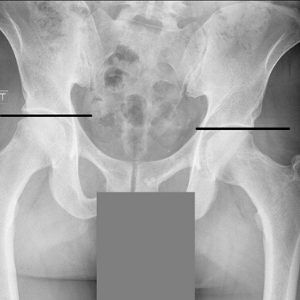
Proper evaluation with X-rays will give us the information we need to obtain accurate measurements and determine exactly which way the sacroiliac joints have moved out of place. Chiropractic adjustments, along with the proper stretches and exercises, make a massive difference in how quickly someone recovers.
Additionally, we check for leg length discrepancy. While SI joint misalignment can lead to a functional leg length difference, we evaluate through X-ray whether or not you have an anatomical difference that caused the misalignment in the first place.
Check Out Our Online Reviews
How we treat Low Back Pain in Houston, TX
Comprehensive Consultation and Exam
We start with a consultation and examination. The consultation is where we look to find out what’s wrong, and chiropractic can help. We want to rule out any other potential issues that might prevent us from helping you.
We will perform range-of-motion, orthopedic, and neurological tests, and then palpate your spine to find out what’s happening. By the end of the consultation and examination, we already have a good idea of what’s going on and what we will need to do to help.
Digital X-Rays
One of the most important things we do in our office is take X-rays. We take X-rays of the entire spine because we treat the spine like one unit. Your neck is not separate from your back, and we want to make sure that we address everything we can to help.
X-rays will tell us how severe your spine is and give us a strong indication of how long it will take to see a change. We are looking for anything we need to see to determine whether we are the right place for you to get the results you need, and anything that would mean we are not the right place for you to get the results you need. Like all chiropractors who may take X-rays, we are looking for fractures or any signs of pathology.
What makes us different is the analysis we put into the X-rays. We take measurements, draw lines, and then create a document that we refer to every time we adjust you. This document tells us how your spine is misaligned, so we know which direction to take it back every time. There’s no guessing. There’s no adjusting it one way one time and then doing something different another time.
Specific Chiropractic Care in Houston, TX
During your examination and x-ray, we are looking for vertebral subluxations. A subluxation occurs when a vertebra moves out of its normal alignment, creating pressure on nerves. This subluxation can increase pressure on discs and the surrounding areas of the spine.
That pressure on nerves will affect everything those nerves go to. Subluxations in the lower back can cause pain and sciatica, but they can also affect the bladder and the lower intestines. If a subluxation is causing your problem, there’s really only one treatment that will be effective: chiropractic care. No pill will put the spine back into place, and there’s no surgery for this problem either.
Custom Exercise Plan
We need your help keeping your spine aligned once you start treatment. Once we’ve had a chance to assess your spine and see what you can do on your own, we will make home care recommendations that include stretches and strengthening exercises.
Our goal is not to give you another full-time exercise program to follow at home, but rather to provide you with the key movements you need to add to get relief as quickly as possible and keep the problems from coming back. While some spinal issues are due to a significant trauma, most are due to imbalances from everyday activities we do either repeatedly or for long periods of time.
Tightness in the back can pull vertebrae out of their normal position, which causes subluxations. While each case is different, we do treat many office workers. Patients who sit at computers for long periods often have tight hip rotators, weak glutes, and side-to-side imbalances.
The seated piriformis stretch is a stretch you can do almost anywhere. Using gravity to help you sit in that stretch for several minutes is key to making it last longer and improving flexibility.
Glute bridges are key to taking the pressure off the hip rotators that got so tight in the first place. By activating your glute muscles, you are using your bigger, stronger muscles instead of overcompensating with hip rotator muscles that grab around spinal nerves.
Dead bug exercises work well because of the cross-crawl movement that builds up strength on either side of your spine.
Spinal Decompression
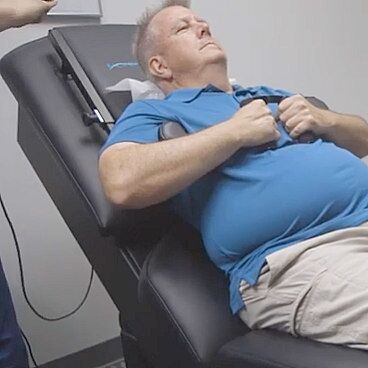
Spinal decompression therapy for the lower back works wonders in helping patients suffering from low back pain, especially when the problem is due to disc involvement. The spinal discs act as spacers and buffers between the vertebrae, and create room for your spinal discs.
When you lose space, you lose the nerves' ability to flow freely, and they become irritated. Spinal decompression gently pulls on the lower back, creating a vacuum and allowing the jelly inside the discs to be pulled back into the disc. Most patients report almost immediate relief following a spinal decompression session.
Receiving a specific spinal adjustment followed by decompression therapy works wonders in alleviating low back pain. We will often complete a session with electrical stimulation and ice to reduce inflammation in the muscles, or mechanical traction, which is a roller table that opens up the joints along the entire spine (always one of our patients’ favorite things to do).
PEMF Therapy
PEMF (Pulsed Electromagnetic Field) Therapy uses a pulsing magnet to heal the body at the cellular level. PEMF works amazingly well in patients dealing with low back pain who are in so much pain that we can barely touch them, or in cases where the problem has been there for a very long time.
PEMF reduces inflammation but, more importantly, speeds up healing time and allows patients to undergo chiropractic care comfortably. We want fast, lasting results, and PEMF helps us get the process started. The most common side effect we hear from our patients is sleeping better that night.
Check Out Our Locations Near You
Galleria
1770 Saint James Place #210
Houston, TX 77056
Greenway Plaza
3334 Richmond Avenue #107
Houston, TX 77098
Memorial City
10497 Town & Country Way #100, Houston, TX 77024
Benefits of Chiropractic Care and Non-Surgical Spinal Decompression in Houston, TX
Chiropractic treatment plans and non-spinal decompression therapy have long-term benefits that can help relieve chronic or acute lower spine pain. It not only treats affected areas to provide pain relief but is also effective at correcting issues or problems that cause low back pain.
The benefits and effectiveness of chiropractic care and treatment techniques have been studied for a long period of time and more than any other aspect of low back pain and alternative treatment options. Besides the fact that chiropractic care is a non-surgical, non-invasive treatment option that is not only cost-effective and does not require any downtime, it also does not require any use of pain medications to reduce pain.
There are numerous benefits that chiropractic care and treatment can provide, including:
- Short and long-term pain relief
- Corrects chronic low back problems
- Restores body functions
- Improves mobility and flexibility
- Improves nerve system functions
- Promotes healthy blood flow
- Promotes quicker healing
- Reduces the effects of joint and tissue degeneration
- Detects and treats causes of low back pain early
- Prevents chronic ailments that cause low back pain
- Enhances daily activities
- Promotes a healthy lifestyle
- Enhances social health
- Enhances physical health and fitness
- Improves mental health stability
Preventing Low Back Pain
It is important to always maintain a healthy lifestyle to prevent pain in the lower back and to strengthen muscles in the low back region to help support daily functions, flexibility, and other activities. With any treatment plan, a continued effort on your part is vital in ensuring that your low back pain does not reoccur.
Here are just a few ways to help prevent lower spinal pain and to keep your low back healthy and strong.
- Exercise that strengthens muscles and includes stretching is great for your lower back. Yoga or Pilates are great exercises to strengthen your lower back.
- Wear shoes that are comfortable and provide ample support.
- Stretch before and after intensive physical activity.
- Do not remain in a stagnant position for longer than you should. Small stretching exercises, leaving your desk to walk around, and even stationery exercise while watching television can have long-term effects in promoting a healthy back.
- Refrain from lifting objects that are too heavy.
- Improve your posture by standing or sitting straight.
- Always check to make sure you have good support at your desk or in a chair.
- Maintain a healthy weight and balanced diet.
The benefits of chiropractic care are most evident when regular and consistent treatment plans are followed through by a licensed and experienced chiropractor who can follow up on your progress and continue to ensure that the pain and causes do not reoccur. Chiropractic sessions can last between 20 to 45 minutes and rarely cause any pain while treatment is being administered.
Always seek the advice of a trained medical professional before starting any treatment plans. Your health matters and low back pain is not something you have to tolerate for the rest of your life. Speak to a chiropractor today on how you can start living a healthy, pain-free lifestyle again.
Frequently Asked Questions
When should I be worried about lower back pain?
All back pain should at least be checked out, especially if it lasts more than a few days. Pain when bending forward or pain shooting down the legs should always be checked out.
What can I do to relieve my lower back pain in Houston, TX?
Start with ice and then give us a call. We will do a consultation and help you determine the next steps. Almost every patient who has been brought into our office has spent days on a heating pad, only to make things worse.
How do I know if my back pain is severe?
Pain when you cough, sneeze, or bear down while using the restroom is likely disc-related and needs to be treated. Pain that shoots down your legs means it’s getting worse and absolutely needs to be treated.
What causes lower back pain?
Common causes of low back pain include misalignment of the spine or pelvis, disc problems, degenerative changes, or muscle strains.
How should I sleep with lower back pain?
Your best option is to lie on your back with a pillow under your knees. If you absolutely cannot sleep on your back, sleep on your side with a pillow between your knees. Avoid stomach sleeping.
How do I tell if lower back pain is muscle or disc-related?
Muscle-related problems usually only hurt with specific movements, while disc-related pain usually hurts worse when you’re just sitting without any movement at all.
How does a slipped disc feel?
Lower back pain with increased lower back temperature (feels hot). Pain worsens with sitting, bending forward, or shooting pains down the leg are all indications of a slipped disc.
Why won’t my lower back pain go away?
Your low back pain often won’t go away because you’re not treating the cause of the problem, and you haven’t figured out what you’re doing in your daily activities that’s making things worse.
What is better for lower back pain: a chiropractor or a massage?
Massage helps the muscles, but if your low back pain is due to spinal misalignment or disc-related problems, you’ll be happier seeing a chiropractor first before adding in massage therapy.
When should I see a Chiropractor in Houston, TX, for lower back pain?
If you’ve had this pain before and it keeps coming back, it’s time to address the cause. If your pain is interfering with your daily activities, let us find out what’s causing it and how we can help you get rid of it.
How can you tell if your spine is out of alignment?
In addition to feeling pain, you may sometimes notice that you can turn well to one side of your body but not the other. Or you’ll notice that you just don’t have the same range of motion in your lower back that you used to have.

Download Dr. Cordova's Bestselling Book
Better Posture Fast: How To Finally End Chronic Neck & Back Pain
And Take Back Control Of Your Health
Enter your text here...